Beginner Basics
Crystal Healing Myths vs Facts: What Beginners Should Really Know
Simple English for beginners worldwide.

This guide is for education, personal reflection, and wellness routines. Crystals do not replace professional medical, psychological, legal, or financial advice.
Introduction
Crystal healing is one of those topics that can attract curiosity very quickly. A beginner may see a beautiful Amethyst tower, hear that Rose Quartz supports self-love, or read that Black Tourmaline is used for protection. The ideas feel welcoming, visual, and easy to explore. For many people, crystals become part of a daily self-care ritual because they are simple to hold, easy to display, and meaningful to connect with.
At the same time, beginners often run into confusing information. One website says you must cleanse a crystal after every use. Another says moonlight is enough. One person says crystals work like magic. Another says crystals do nothing at all. This can leave new readers wondering what is true, what is tradition, and what is just internet noise.
The most balanced way to start is to see crystals as tools for intention, mindfulness, meditation, personal reflection, and spiritual practice. A crystal can remind you to pause before reacting, set a calm goal for the day, or return to a habit you want to strengthen. Many people enjoy the symbolic meanings, colors, textures, and rituals around crystals even when they do not make extreme claims.
This article clears up common myths and compares them with beginner-friendly facts. We will cover what crystals can realistically support, where beginners get confused, how to use crystals in a grounded way, and how to build a routine that feels meaningful without becoming stressful.
Table of contents
Why beginners start crystal healing
People come to crystals for many reasons. Some want a calm evening routine. Some are searching for a visual symbol of hope during stressful times. Some enjoy chakra work, meditation, or journaling and want a physical object that helps them stay present. Others are simply curious about cultural traditions, mineral beauty, and personal meaning.
That variety matters, because it explains why there is no single experience that fits everyone. Two people may both buy Clear Quartz, but one uses it on a work desk as a focus reminder while another uses it during meditation for spiritual clarity. The crystal is the same. The routine, intention, and personal connection are different.
Mindfulness
A crystal can remind you to slow down, breathe, and notice your thoughts before reacting.
Reflection
Many people pair crystals with journaling, gratitude lists, or quiet morning check-ins.
Spiritual practice
Others use crystals during prayer, meditation, chakra work, or energy-focused rituals.
Crystal healing myths vs facts overview
A lot of myths grow because crystal advice is shared quickly on social media. Short videos often simplify everything into one rule or one dramatic promise. In reality, crystals are usually better understood through habits, symbolism, and personal use than through extreme claims.
A healthy beginner mindset is this: crystals may support awareness, comfort, focus, and emotional rituals, but they are not magic shortcuts. They work best when they help you practice something real such as rest, reflection, communication, gratitude, or boundaries.
Myth 1: Crystals work the same for everyone
This is one of the biggest beginner misunderstandings. A crystal meaning is not a fixed machine result. If Amethyst is often linked to calm, that does not mean every person will respond to it in the same emotional way. Some people love holding Amethyst before sleep. Others prefer Lepidolite, Howlite, or no crystal at all.
The fact is that crystal use is highly personal. Color associations, spiritual background, emotional state, and daily habits can shape the experience. Many meanings come from long-standing community traditions, but how you connect with a crystal still matters.
That is why it helps to start with a clear purpose. If your goal is emotional softness, Rose Quartz may feel more supportive than Black Tourmaline. If your goal is focus, you may connect more with Clear Quartz or Citrine. If your goal is grounding, a darker stone may feel more stable.
Myth 2: You need many crystals before you can start
Beginners are often shown large collections and may feel behind if they only own one stone. But crystal practice does not need to begin with ten purchases. In fact, a large collection can distract a beginner from building a real routine. When you own too many stones too fast, you may spend more time organizing them than actually using them.
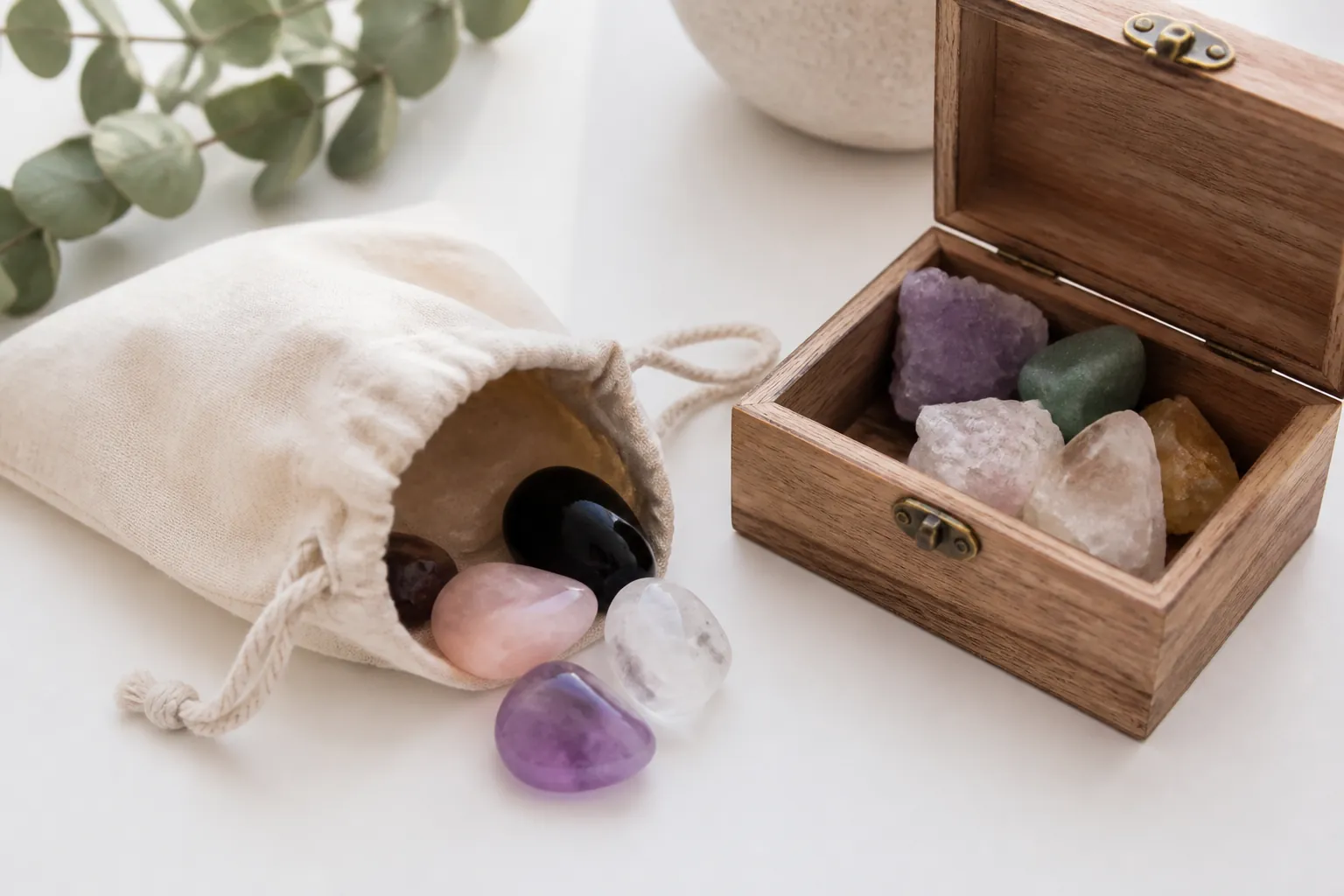
The fact is that one or two crystals are enough to begin. Many people start with a simple pair such as Amethyst for calm and Clear Quartz for clarity, or Rose Quartz for emotional warmth and Black Tourmaline for grounding. A smaller set makes it easier to notice what feels useful in your daily life.


Myth 3: Expensive crystals are always better
Price can reflect size, rarity, cut quality, color, origin, or seller markup. It does not automatically reflect how useful a crystal will feel in your routine. A small, affordable tumble can be more meaningful than a large expensive piece if you actually carry it, hold it, and connect it to your intentions.
The fact is that beginner value comes more from consistency than from price. A modest Amethyst or Clear Quartz that you keep near your bed, use in meditation, or place on your desk may support you more than a costly stone that stays on a shelf because you are afraid to touch it.
This is also why buying from trusted sellers matters more than chasing expensive pieces. Look for clear names, reasonable descriptions, and honest photos. If you want more help choosing by goal, the Crystal Finder page can help narrow your focus before buying.
Myth 4: You must follow strict rules perfectly
New readers sometimes feel stressed because crystal content can sound very strict. Cleanse at this time. Charge under this moon. Do not mix certain stones. Keep separate boxes. Hold only in the left hand. This kind of advice can turn a peaceful hobby into another source of pressure.
The fact is that most crystal routines are flexible. Traditions exist, and they can be meaningful, but you do not need a perfect ritual to begin. If you have a respectful, simple practice that helps you slow down and reflect, that is a strong start.
For example, some people like moonlight charging. Others simply sit quietly, hold the crystal, and say one sentence such as “I want more calm and clearer thinking today.” Both approaches can support intention. A beginner-friendly crystal habit should reduce confusion, not create it.
Myth 5: Crystals replace real help
This is the most important myth to challenge. Crystals may feel comforting, grounding, or inspiring, but they are not a replacement for trained medical care, therapy, emergency support, or practical financial guidance. If a person is dealing with serious anxiety, depression, physical illness, trauma, or unsafe circumstances, professional help matters.
The fact is that crystals are best seen as supportive tools. They can sit beside healthy actions like rest, hydration, journaling, counseling, meditation, exercise, communication, or better sleep habits. The crystal becomes part of a larger care system rather than the only answer.
Use crystals to support your routines, not to avoid real-world support. If you need expert help, let crystals be a comfort item beside that help, not instead of it.
Myth 6: Every crystal can go in water
One of the most common beginner mistakes is assuming that water is always a safe cleansing method. It is not. Some crystals are stable in brief water contact, but others can fade, crack, rust, or break down over time. A “natural” material is not automatically water-safe.
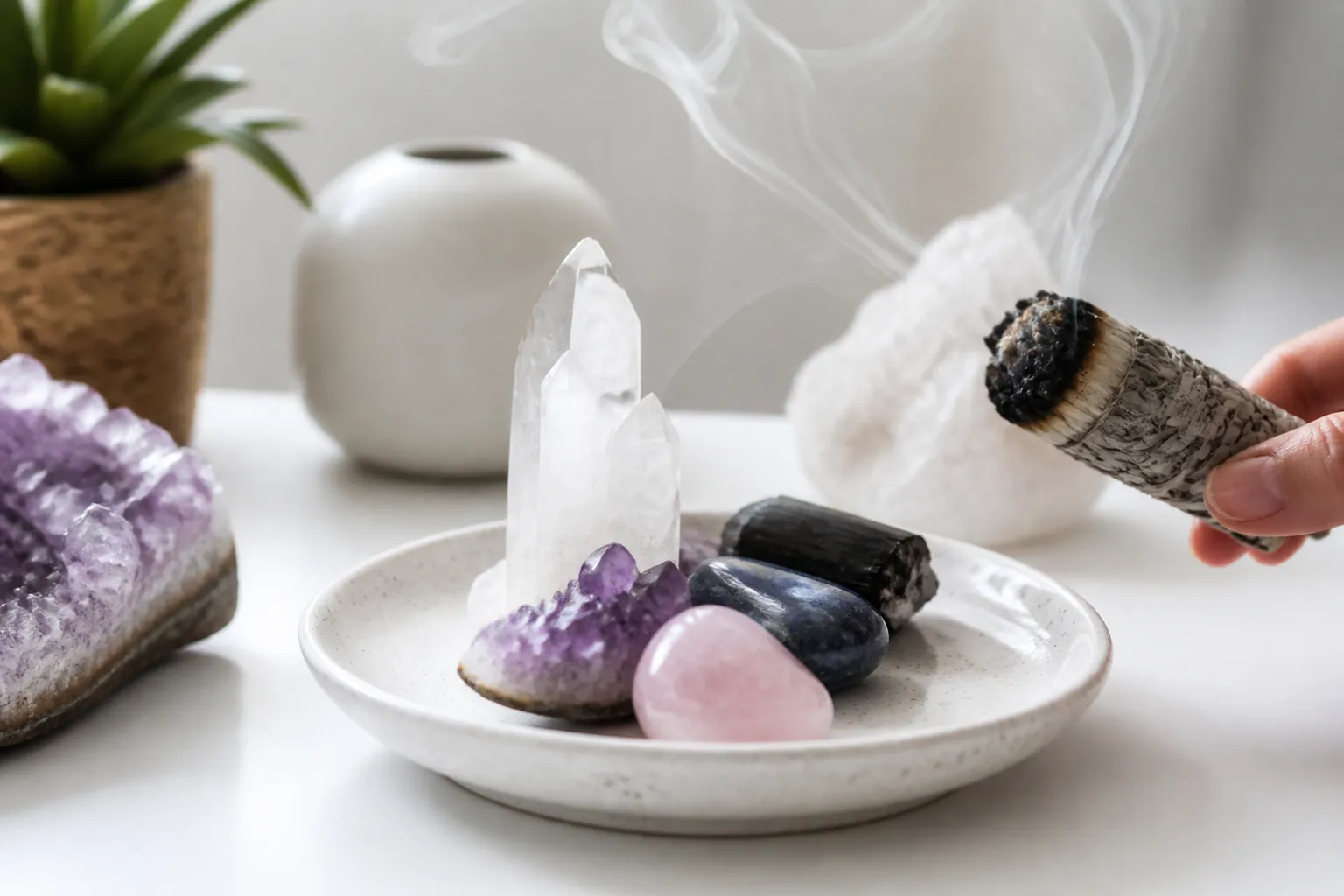
The fact is that when you are unsure, dry cleansing methods are safer. Sound cleansing, smoke, breath intention, and placing a stone on selenite are widely used beginner options. This is why our How to Cleanse Crystals guide and cleanse and recharge article focus on simple methods first.
| Crystal | Water note | Beginner advice |
|---|---|---|
| Clear Quartz | Often considered water-tolerant for brief contact | Dry methods are still the easiest safe choice for beginners. |
| Amethyst | Usually okay with brief water, but sunlight is the bigger concern for fading | Use sound or moonlight when possible. |
| Rose Quartz | Commonly treated as water-safe for quick rinses | Avoid harsh soaps or long soaking. |
| Selenite | Not recommended in water | Keep dry and use for dry cleansing only. |
| Malachite | Not recommended in water | Handle carefully and choose dry cleansing. |
| Pyrite | Not recommended in water | Moisture may damage the surface over time. |
Myth 7: Cleansing and charging are exactly the same
People often use these words together, but they usually point to different ideas. Cleansing is about clearing old energy, stress, or heavy feeling from a crystal. Charging is about refreshing it with intention, moonlight, or another symbolic reset. Some routines combine both, but the meanings are still different.
The fact is that beginners do not need to overcomplicate this. If you want a simple rhythm, cleanse when the crystal feels dull, after a stressful day, or when you bring a new crystal home. Charge when you want to reconnect the crystal to a goal such as calm, confidence, sleep, or self-love.
A very easy method is this: first use a dry cleanse, then hold the crystal and speak a short intention. That gives you both a symbolic reset and a clear purpose.
A simple beginner crystal routine
One reason myths spread is that people assume crystal healing must be dramatic to be meaningful. In reality, simple routines are often the most sustainable. A few minutes a day is enough to build a real habit.
1. Pick one goal
Choose one focus such as calm, love, confidence, sleep, or concentration.
2. Pick one crystal
Choose a crystal linked to that goal and place it where you will actually see it.
3. Set one sentence intention
Keep it simple: “I want a calmer evening,” or “I want to speak more clearly today.”
4. Use it with a habit
Pair the crystal with journaling, breathing, bedtime, desk work, or meditation.
5. Cleanse occasionally
Use moonlight, sound, or selenite when the crystal feels ready for a reset.
6. Reflect after one week
Ask whether the routine helped you pause, focus, or feel more connected to your goal.
Beginner crystal comparison table
This table is not about hard rules. It is a simple starting map for popular crystals that many beginners explore first.
| Crystal | Common meaning | Beginner benefit theme | Chakra link | Easy first use |
|---|---|---|---|---|
| Amethyst | Calm, insight, reflection | Quiet evenings, meditation, stress support | Third Eye, Crown | Place by the bed or hold during breathing practice. |
| Rose Quartz | Love, softness, compassion | Self-love, emotional comfort, heart-focused journaling | Heart | Keep near a mirror or journal for self-kindness reminders. |
| Clear Quartz | Clarity, amplification, focus | Simple desk support, meditation, intention setting | Crown | Place on a desk while working or studying. |
| Black Tourmaline | Grounding, protection | Stability, boundaries, travel support | Root | Keep near the front door or carry in a pocket. |
| Citrine | Confidence, joy, motivation | Positive mindset, energy, goal setting | Solar Plexus | Use on a desk before planning work or business tasks. |
Helpful tips for beginners who want the facts
Let symbols support action
If you choose Rose Quartz for self-love, match it with a real self-kindness habit. If you choose Black Tourmaline for boundaries, pair it with better communication or time protection. The crystal becomes stronger as a reminder when it is attached to a real action.
Keep a light journal
You do not need long notes. Even writing one line each day helps. Try: “What crystal did I use today, and how did I feel before and after?” This can reveal patterns without turning your practice into a chore.
Choose safety over trends
If a trend tells you to soak every crystal in water, place every stone in strong sunlight, or use a crystal instead of practical care, step back. Gentle methods and common sense usually make the best long-term routine.
Frequently asked questions
Do healing crystals really work?
Crystals are not proven medical treatment. Many people still find them meaningful for mindfulness, emotional reflection, intention, and spiritual practice. It is more realistic to see them as supportive wellness tools than miracle solutions.
Which crystal is best for complete beginners?
Clear Quartz, Amethyst, and Rose Quartz are three of the most beginner-friendly choices because they are popular, widely available, and easy to match with simple goals.
Do I need to believe strongly for crystals to help?
Not always. Some people use crystals mainly as reminders to slow down, breathe, or stay connected to a goal. Even a symbolic object can support a real habit.
How often should I cleanse my crystals?
Weekly is a common beginner rhythm, but there is no universal rule. You can also cleanse after stressful situations, after travel, or whenever a crystal feels neglected.
Can I use multiple crystals together?
Yes. Keep it simple at first. One main crystal plus one support crystal is enough for most beginners.
What if different websites give different meanings?
That is normal. Crystal meanings often come from shared traditions, symbolism, and personal interpretation. Look for the overlap, then notice what feels meaningful in your own practice.
Can I sleep with crystals?
Many people keep crystals near the bed. For safety and comfort, placing them on a bedside table is usually easier than sleeping directly on them or under a pillow.
Where should I place crystals at home?
Common places include a work desk, bedside table, meditation area, shelf, or near the front door. Choose places connected to the purpose of the crystal.
Final thoughts
Crystal healing becomes easier when beginners move away from dramatic promises and toward grounded habits. You do not need to know every meaning, buy a large collection, or follow complicated rituals perfectly. What matters more is choosing one clear purpose, using a crystal regularly, and keeping your routine safe and realistic.
The myths around crystals often come from trying to turn a personal practice into a universal formula. The facts are calmer: meanings can guide you, rituals can help you slow down, and your daily actions still matter most. That balance lets crystals stay meaningful without becoming overwhelming.
Pick one goal today, choose one crystal, and try a five-minute routine for one week. Small consistent practice usually teaches more than endless searching.